
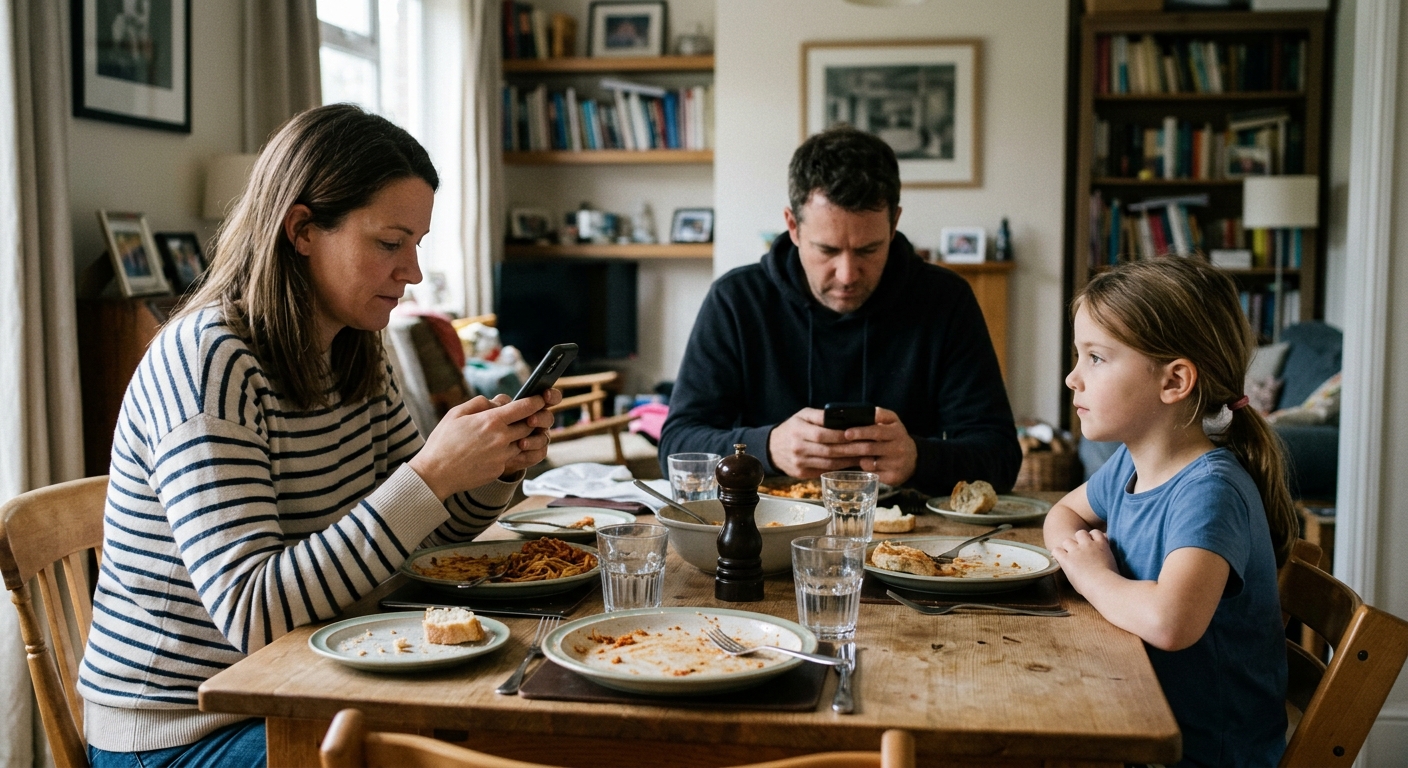
AI-generated illustration; not a photograph of the reported event.
- calendar_today June 16, 2026
In Oklahoma, a recent study has placed a spotlight on the significance of family meals, emphasizing their powerful role in fostering stronger family connections amid today’s busy schedules and rising technology use. The findings, which surveyed parents across various communities, revealed that adults are now more likely than children to use their phones during meals—a trend that has implications for household dynamics and youth development in the region.
Parents’ Media Use Surpasses Children at the Dinner Table
The study reported that over 75% of parents acknowledged engaging in media use during family dinners. With modern parenting responsibilities and work obligations often stretching into the evening, many households find themselves juggling screen time even during traditional family routines. This shift has prompted many Oklahoma families to reflect on the value and quality of their interactions at dinner.
The Impact of Screen Time on Family Connection
Health professionals and child development specialists in Oklahoma stress that while digital devices are an unavoidable part of contemporary life, their presence at the dinner table can erode the benefits of shared meals. Dr. Margie Skeer, who led the research, underscored that it’s not the food but the distraction-free conversation and connection that yield lasting emotional satisfaction and lower risks such as adolescent substance use. Without mindful attention, technology can become a barrier to meaningful family bonding.
Differentiating Between Media Types
The study draws a distinction between communal, large-screen media—such as a family movie night—and individual device usage during meals. Shared activities using larger screens are recognized for their capacity to facilitate family connection by creating shared experiences. In contrast, isolated phone or tablet use at the dinner table tends to fragment attention and interaction, ultimately weakening the positive effects that family dinner can offer.
Recommendations for Oklahoma Households
Given the prevalence of solo dining and constant connectivity, the researchers encourage even small steps toward more mindful routines. For Oklahoma families facing time constraints, experts advise carving out just one screen-free family meal per week. They note that it is not necessary to host elaborate dinners; even brief check-ins over shared snacks can deliver opportunities for connection and support healthy eating habits. Simple traditions established in the home—regardless of frequency—have a measurable impact on parenting outcomes and overall family wellbeing.
Balancing Technology Use with Meaningful Interaction
While some may view digital devices as a threat to tradition, researchers highlight that with intention, technology use can foster togetherness. Organized family activities, such as watching educational programming or movies together, can serve as a springboard for discussion and relationship-building. Oklahoma’s schools and community organizations are increasingly promoting these balanced approaches, encouraging families to consider structured, shared screen moments as a complement—not a substitute—for personal conversation.
Nurturing Family Bonds Through Shared Meals
At its core, the study’s message resonates with local parents seeking to strengthen their relationships amidst busy routines. It points to a vital opportunity for residents across Oklahoma to pause, unplug, and focus on each other at least occasionally during the week. The research affirms that the quality of family meals—marked by focused, undistracted time together—remains a cornerstone for family bonding and holistic development.
As Oklahoma families navigate an evolving digital world, experts and advocates alike encourage renewed commitment to distraction-free mealtimes. By valuing intentional interaction, families can continue to build traditions that serve both the nutritional and emotional needs of all members, ensuring that the benefits of family dinner persist for generations.


