
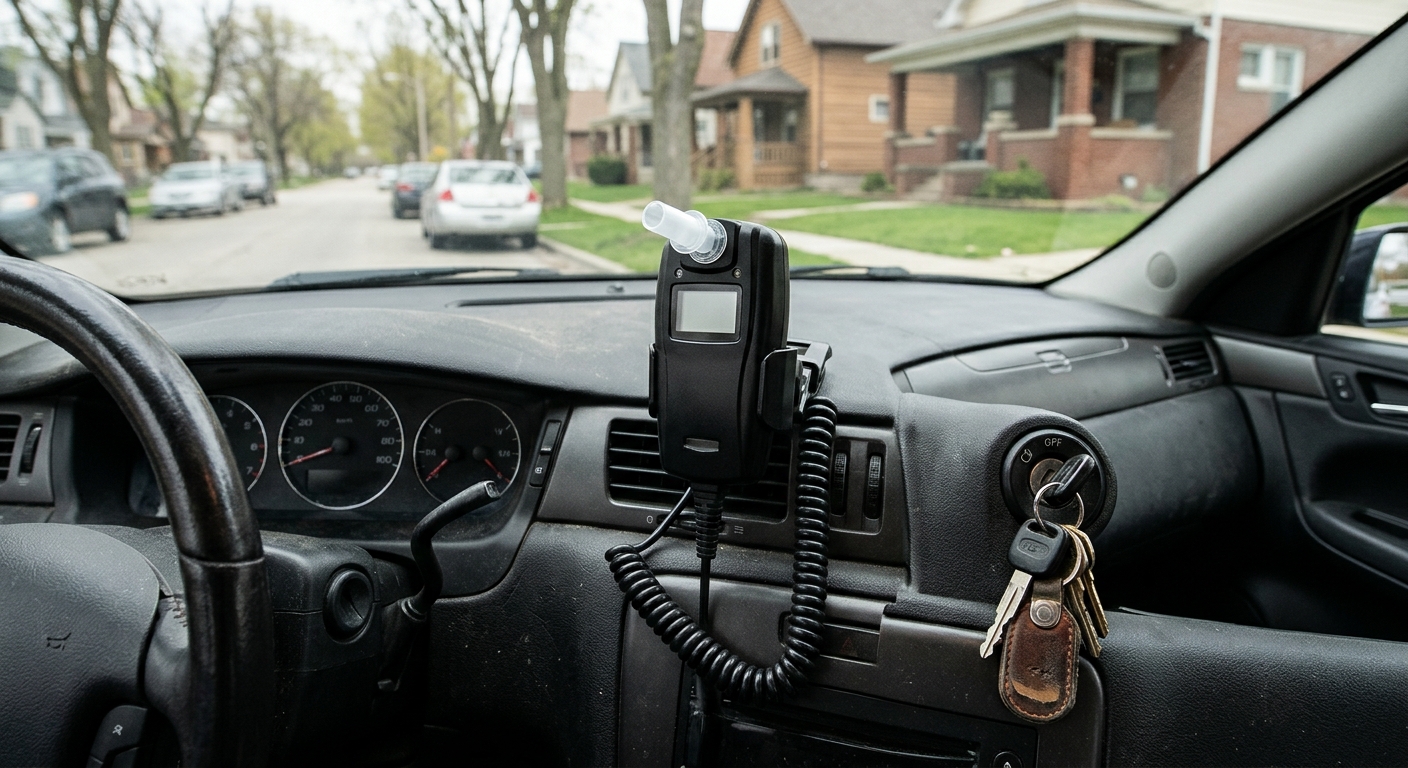
AI-generated illustration; not a photograph of the reported event.
- calendar_today November 1, 2026
The Dual Pathways of Oklahoma's DUI Legal System
In Oklahoma, individuals suspected of driving under the influence can face consequences on two distinct legal tracks: criminal and administrative. This dual system means drivers can lose their licenses and face substantial penalties even when criminal DUI charges are not filed or do not result in a conviction.
A Personal Story: Gaylene Ricketts’ Experience
Gaylene Ricketts, an El Reno resident, found herself entangled in this system following a late-night traffic stop in November. After allegedly running a stop sign, Ricketts was asked to complete a field sobriety test. Officers noticed her pupils were different sizes, and although she agreed to the sobriety test, she declined a blood alcohol content (BAC) test. She was then booked for a DUI.
Not long after, Ricketts was hospitalized and diagnosed as having a stroke. Several months later, prosecutors declined to pursue charges, citing her medical emergency. Despite this, Ricketts was left with enduring administrative consequences: she paid over $2,000 in fees, attended mandated counseling sessions, and continues to use an ignition interlock device—all without a DUI conviction or evidence of drug or alcohol use.
Understanding Implied Consent Law and Administrative Penalties
Oklahoma’s implied consent law means drivers, upon being arrested for actions on the road, are presumed to have agreed to chemical testing for intoxicating substances. Refusing a BAC test carries immediate administrative consequences: for a first refusal, licenses are revoked for at least 180 days. To reinstate a license, one must complete certain courses and programs unrelated to any criminal prosecution.
These administrative penalties are governed independently from the criminal justice system and are enforced by Service Oklahoma, the state agency overseeing driver’s licenses and vehicle registrations.
Legal Standards and Confusion Among Defendants
Legal experts note the differences in standards for criminal versus administrative cases. University of Oklahoma law professor and former prosecutor Michael Smith explains that while the criminal burden of proof requires guilt beyond a reasonable doubt, administrative cases only require officers to have reasonable grounds for belief. Attorney Brian Morton highlights that administrative standards are the lowest in law, not even requiring proof that the suspect was under the influence—only that the officer believed so and that the proper procedures were followed.
Ricketts’ decision to refuse the BAC test was influenced by advice from law enforcement family members and concern that prescribed medication could impact testing. As she notes, “The problem is you’re guilty if you refuse the test, but you’re guilty if you take the test if you have some kind of medical problem.”
Service Oklahoma’s Administrative Process and Public Impact
Since its formation in 2022, Service Oklahoma has managed not only state-run offices but also a large number of licensed private operators. Out of 265 locations, 234 are licensed operators, according to the Legislative Office of Fiscal Transparency. While this hybrid model helps serve rural areas, variations in service and knowledge can create inconsistencies and confusion for drivers like Ricketts.
A petition to contest license revocation must be filed within 30 days of notice; failing to file forfeits the right to a court hearing. In Ricketts’ case, awaiting news on criminal charges led to missed chances to challenge administrative penalties. As Service Oklahoma’s Christina Dukeman notes, administrative and criminal proceedings remain separate and the outcome of one does not automatically influence the other.
State-by-State Variations and Broader Legal Questions
Every U.S. state except Wyoming enforces administrative penalties for BAC test refusal under implied consent laws. Wyoming, instead, uses a no-refusal policy granted by immediate judicial warrants and criminal penalties for obstruction if refused. Other states, such as Alaska and Minnesota, issue criminal charges for refusal, and Tennessee allows forced testing with a warrant.
Critics such as Professor Smith argue that Oklahoma’s administrative system may extend further than necessary, unintentionally penalizing individuals not ultimately found guilty of impaired driving. For Oklahomans like Ricketts, the administrative process can cause significant financial, emotional, and reputational harm, even in the absence of a criminal conviction.
Source: oklahomawatch.org.


