- calendar_today August 10, 2025
From Oilfields to Agriculture: How Tariff Shocks Are Reshaping Oklahoma’s Investment Outlook in 2025
In 2025, the U.S. government enacted sweeping tariff policies, including a 104% tariff on Chinese imports and a 25% tariff on automobile imports from several key partners (Reuters, April 3, 2025). These measures have significantly impacted Oklahoma’s economy—particularly in sectors like energy, agriculture, and manufacturing.
The financial fallout was swift. By the next morning, the Dow had fallen more than 2,200 points, the S&P 500 lost nearly 10%, and Oklahoma-based investors—many tied to commodity markets—reacted with caution (The Guardian, April 5, 2025).
A Trade War Escalates
China responded quickly to the U.S. tariffs by slapping a 34% tariff on all American products, while Canada added a 25% tariff on automobile imports (AP News, April 4, 2025).
“We will not be blackmailed,” declared a Chinese Ministry of Commerce spokesperson. “If the U.S. escalates, we will respond in kind.” — Reuters, April 4, 2025
Where Oklahoma Is Feeling the Pressure
1. Energy and Oil Production
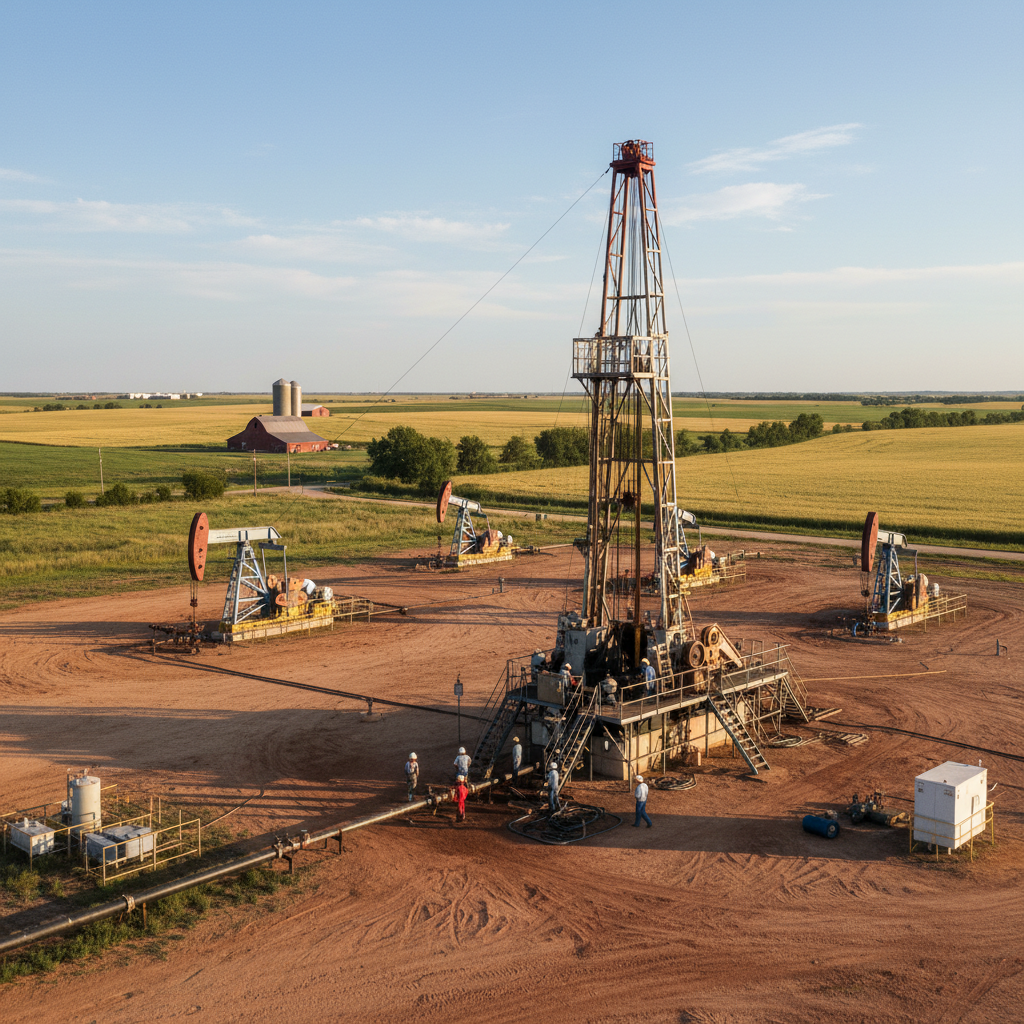
Oklahoma’s oil and gas sector—centered around regions like Tulsa and the Anadarko Basin—is feeling indirect pressure from global trade instability. Although crude oil itself has not been directly targeted, tariffs on drilling equipment, pipelines, and imported steel are raising costs for energy producers.
Supply chain delays are also slowing project timelines. Several midstream companies in Oklahoma City have reported longer procurement lead times and higher costs on imported components.
“It’s the ripple effects we’re worried about,” said a Tulsa-based energy analyst. “When capital equipment costs rise, so do production risks.”
2. Agriculture and Livestock
Oklahoma’s farms and ranches are bearing the brunt of China’s 34% retaliatory tariff on American agricultural exports. Key state exports like wheat, beef, cotton, and sorghum have seen contracting demand in foreign markets.
According to the USDA, agricultural exports are expected to reach $170.5 billion in FY2025—an improvement from 2024, but still trailing the levels seen before the trade war began (USDA Outlook Report, March 2025).
“Wheat prices are soft, and cattle exports are stalling,” said a farmer in Enid. “It’s hard to plan ahead when your markets shift this fast.”
3. Manufacturing and Equipment Supply
Tariffs on imported machinery and auto components are affecting Oklahoma’s aerospace and industrial manufacturing sectors, including companies operating in Norman and Midwest City. Rising import costs are complicating budgets and forcing some manufacturers to rethink expansion.
Meanwhile, smaller equipment dealers across the state are seeing slower turnover as customers delay purchases in light of pricing uncertainty.
Investor Sentiment in Oklahoma: Guarded and Commodity-Sensitive
The Oklahoma investment landscape has grown more conservative. Following the tariff announcements, major indices plunged—mirroring the caution felt across the state’s agriculture- and energy-driven economy (Bloomberg, April 8, 2025).
Gold rose by 1% to $3,010.39 per ounce, signaling a broader shift to low-risk assets (Reuters, April 9, 2025).
“Commodity-linked portfolios are being rebalanced fast,” said Erin Simmons, strategist at JPMorgan Asset Management. “Investors are pulling back from volatility-heavy positions.”
Short-Term Challenges, Long-Term Adaptation
Oklahomans may soon feel the impact at the checkout counter, with higher prices for electronics, vehicles, and farming equipment. Economists warn of potential stagflation—a combination of rising inflation and stagnant growth—if tariffs persist into Q3 (Business Insider, April 6, 2025).
On the flip side, some economic strategists believe Oklahoma could benefit in the long term from federal incentives aimed at reshoring manufacturing and building domestic supply chains—particularly in energy infrastructure and agricultural processing.
What Oklahoma Investors Should Watch
For investors in Oklahoma, 2025 is a defining year. The state’s core economic pillars—energy, agriculture, aerospace, and logistics—are being reshaped by trade policy, forcing a reevaluation of investment priorities.
Emerging investor focus areas include:
- Domestic infrastructure and clean energy projects
- Agricultural tech and value-added processing
- Local manufacturing facilities with minimal reliance on imports
- Real estate and rural land as long-term commodity hedges
In a state where resilience and resourcefulness run deep, Oklahoma investors may find their advantage lies in patience, diversification, and a sharp focus on domestic fundamentals.
Stay informed, Oklahoma. Subscribe to our newsletter for expert insights, policy updates, and regional investment strategies tailored to the Sooner State’s evolving economic landscape.