- calendar_today August 14, 2025
.
EV adoption in the United States has run into renewed skepticism this year. After an extended period of month-over-month growth in sales lasting more than a year, the numbers have started to decline. Multiple automakers are struggling to get their plug-in vehicles off the lot, including recent examples such as Genesis and Volvo, the latter of which has already halted its U.S. electric vehicle sales.
Changes in policy have also muddied the waters. The current federal government has reduced subsidies and has weakened vehicle pollution standards, diminishing top-down buyer incentives. However, a new industry analysis suggests that the biggest challenge may not be at the policy level, but in America’s garages.
Charging the Places You Park
Range anxiety, or concerns about EV charging, has long topped consumer surveys about the issue. A new consumer market research report from Telemetry Vice President Sam Abuelsamid goes behind the problem to investigate an often overlooked contributor: the use of garages.
EV charging receives the most attention when it comes to infrastructure. In addition to continued policy incentives for building fast-charging networks, charging at home is also a key component. Using AC power, the majority of charging is already completed at one’s residence, with a recent estimate suggesting that up to 80 percent of all EV charging is done with AC power in single-family housing. A prior study from the National Renewable Energy Laboratory (NREL) determined that nearly 42 percent of American homeowners have parking spaces equipped near a wall outlet that could support level 2 charging (240 volts).
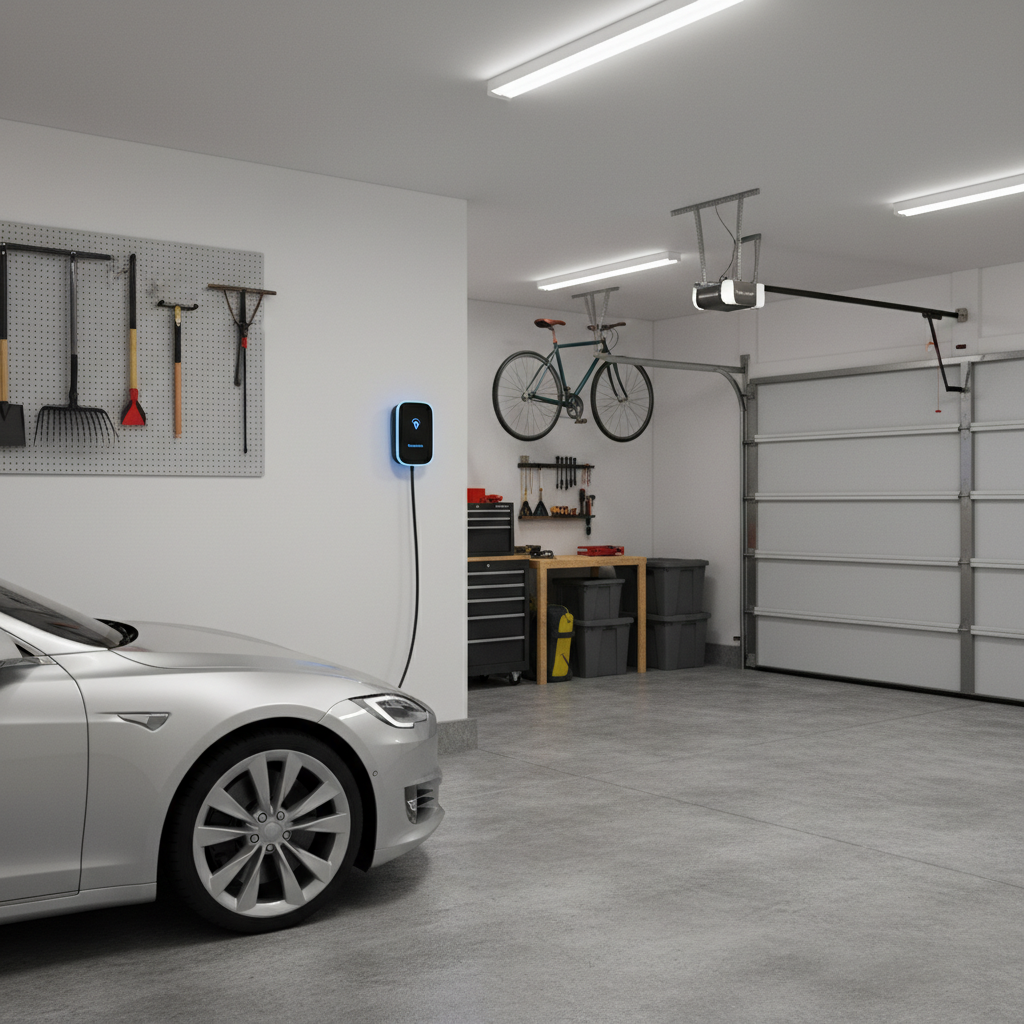
However, that could change dramatically if Americans reclaimed their garages for parking instead of storage. If parking habits shifted, the share of American housing units with available outlets that could support level 2 chargers “could increase to 68 percent,” stated Abuelsamid. “The key variable is parking behavior, namely whether or not homeowners use their private garage for parking vehicles or for storage or both.”
Abuelsamid, as well as the NREL study, noted that “90 percent of all houses can have a 240 V outlet added near where cars could be parked.” Furthermore, many of those with available space may have the option of re-wiring a garage to accommodate the charging port. In total, “if all factors are taken into account, the number of houses with access to either an EVSE [electrical vehicle supply equipment] parking space or that could be potentially re-wired would be 72.5 million.”
That would more than double the current 31.4 million, making a total capable of EV charging in the U.S. The NREL report, as well as Abuelsamid’s analysis, both claim this figure to be greater than any of Telemetry’s high EV penetration forecasts. These estimates run from 33 million to 57 million vehicles by 2035.
Theoretically available does not mean technically ready. The NREL study also found that almost 34 million American houses, almost half of the total, would require new electrical wiring upgrades to support the level 2 charger, which often requires a minimum of 30 amps to work. Costs for the necessary upgrades, which could include both new wiring as well as panel replacement, could run homeowners thousands of dollars.
Add this to the cost of the vehicles themselves, and it can erode the purchase appeal of EVs being an affordable form of long-term transportation. The result is what one analyst at the Union of Concerned Scientists (UCS) called a “loaded vehicle” in terms of initial cost.
Multifamily housing issues
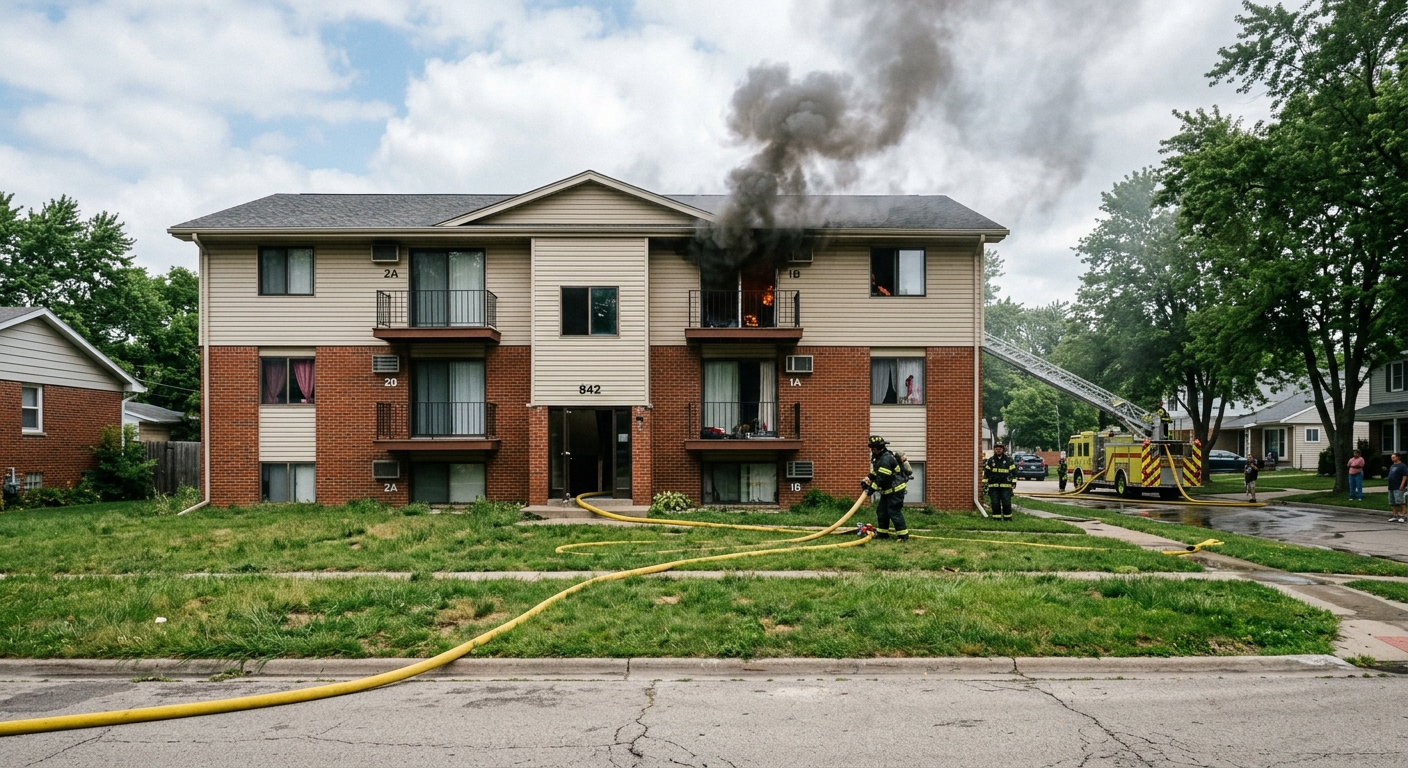
The problem only gets worse for the 23 percent of Americans who live in multifamily residences, which include apartments, condos, and townhomes. In these locations, individual EV owners will often not have the autonomy to install chargers in parking spaces. Management companies or landlords, for example, are often required to authorize charger installation, or for the unit to be co-op owned, a board of residents would have to give permission. In all cases, it is not guaranteed.
The costs to individual owners are greater as well. A major upgrade could be required before two shared level 2 chargers can be installed in a co-op, for instance, according to Telemetry. The upgrade could take the form of an entirely new electrical panel, at a cost that may run in the millions of dollars. Wiring would then be required to run from the panels to individual parking spaces, an expensive and time-consuming undertaking for a multifamily building.
Utility or local government programs often offer subsidies to encourage charger installation in these locations, but in many cases, tenants do not qualify and are unable to even initiate the process. The cost and approval challenges leave many renters without charging access in their homes.
Where they do live, there are only about 1 million EVs in multifamily housing, but of those, only 11 percent are parked close enough to an outlet to be charged. A patchwork of state laws has seen requirements set for developers to include EV-ready spots at 20–25 percent of residences in new buildings, but even in that case, only 6.7 million and 11.4 million total charging-capable spaces in multifamily homes are expected by 2035, Telemetry forecasts.
For the roughly 47 percent of American households not in apartment buildings or the one-third who won’t have home charging after factoring in the other conditions, public charging will be needed. Estimates from Telemetry suggest that between 11.7 million and 14.3 million EV drivers who do own houses will use public charging in 2035. At the same time, another 7.8 million and 8.1 million EV owners living in multifamily residences will be forced to utilize public stations.
The infrastructure required will need between 523,000 and 586,000 DC fast chargers installed in those areas, as well as 1.5 million and 1.6 million additional level 2 chargers nationwide to account for other residences. However, this expansion is not without its own complications. U.S. power companies are already feeling the pressure as new artificial intelligence data centers compete for generation and distribution capacity. Building out the necessary large-scale public charging sites for a nationwide fleet could also be more difficult than it seems.
The future of electric vehicles
For all the positive headlines and media coverage around the growth of the EV market, the path forward for EV adoption in the United States may be less rosy. Between cluttered garages, high cost of upgrades, and the shared space problems of multifamily housing, EV growth may continue to slow this year. Even if major public charging station expansion is successful, Telemetry suggests that the number of public stations may fall short of what is required.
The future of electric vehicles in America may well depend as much on whether homeowners are willing to give up their garages as on policy or automaker strategy.