- calendar_today August 20, 2025
.
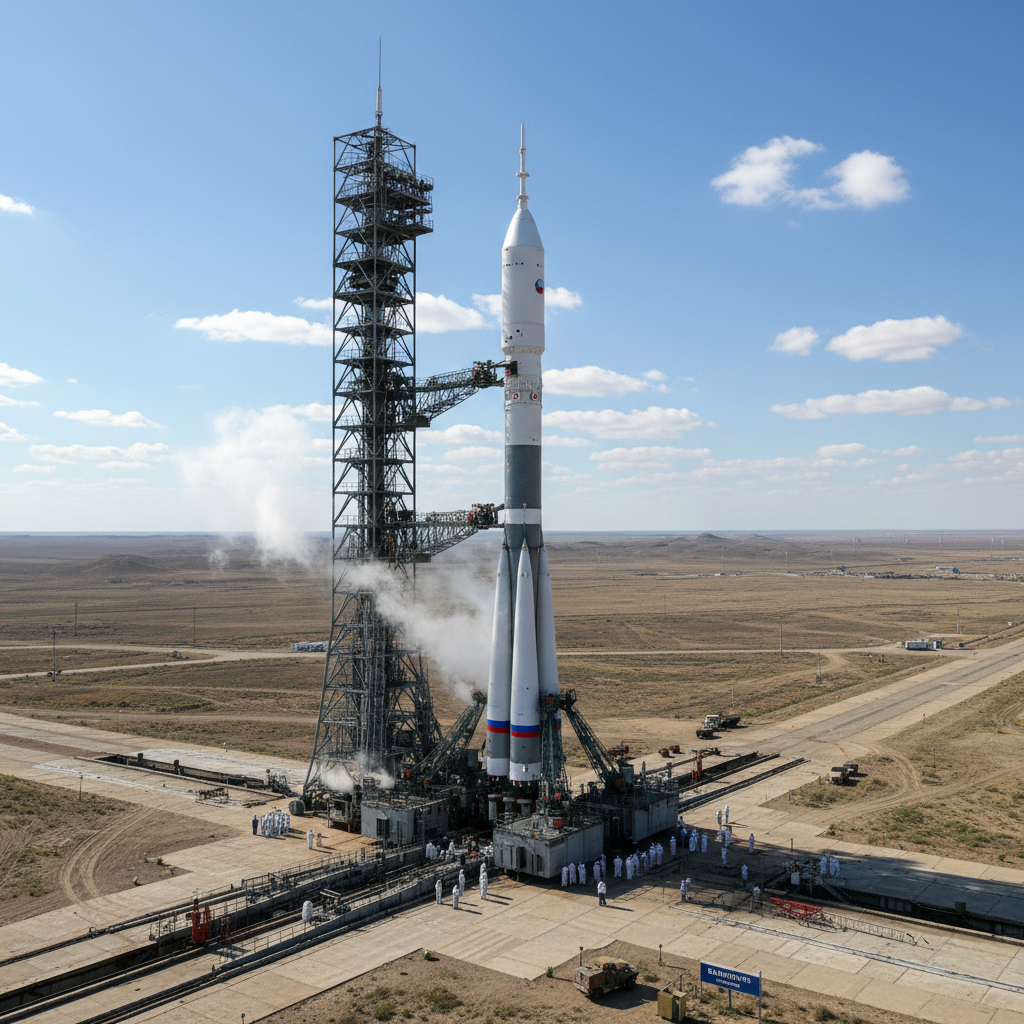
Russia plans to send its next new rocket, Soyuz-5, into the air before the end of this year, according to Dmitry Bakanov, the head of Roscosmos, in a recent interview with state-owned TASS.
“Yes, we are planning for December,” said Bakanov, who also stated that preparations for the first launch are almost complete. The rocket is scheduled to launch from Baikonur, Kazakhstan. If successful, it will be the maiden voyage of a vehicle that’s been in development for more than ten years. Roscosmos expects several test launches, but the rocket is not expected to enter full service until 2028.
Technically, Soyuz-5, also known as Irtysh, is not a totally new concept. The rocket borrows heavily from the Zenit-2 rocket that was first developed in the 1980s by the Yuzhnoye Design Bureau in Ukraine. Zenit rockets were produced in Ukraine, but the rocket used Russia’s RD-171 engines. It was a unique case of continued cooperation in aerospace after the collapse of the Soviet Union. Russia’s invasion of Ukraine in 2022 put an end to that arrangement. Last year, the Russian military even bombed the Ukrainian plant where Zenits were once assembled.
Soyuz-5 is, for all intents and purposes, a larger version of the Zenit that is manufactured in Russia rather than Ukraine. The redesign eliminates Ukraine’s involvement in the process and ensures that all major components are of domestic origin. From Moscow’s point of view, that is a significant strategic advantage. It ends years of reliance on foreign suppliers and, at the same time, replaces Proton-M, an aging launcher.
Bridge Between Past and Future
The Soyuz-5 is an expendable launch vehicle from a technical point of view. In terms of capability, it can be classified in the medium-lift category. It can lift around 17 metric tons to low-Earth orbit. Performance is achieved by using larger propellant tanks than the Zenit. The heart of the Soyuz-5 is the RD-171MV engine, which is the latest iteration of a family of engines with a long history.
The original design is from the Energia program of the 1980s, which gave power to the Soviet Union’s short-lived space shuttle, Buran. The RD-171MV’s notable achievement is that it contains no Ukrainian parts. The kerosene-fueled engine, burning with liquid oxygen as the oxidizer, can generate over three times as much thrust as NASA’s Space Shuttle main engine. That makes it the most powerful liquid-fueled rocket engine currently in use.
In other words, however, Soyuz-5 is an expendable rocket. Newer competitors, with SpaceX’s Falcon 9 most prominent, are designed for reusability. In many ways, the difference casts doubt over whether Soyuz-5 can ever hope to attract a sizable portion of the international launch market.
Even so, the rocket has a meaningful role to play for Roscosmos. War expenses and international sanctions have left Russian space funding in short supply. As a result, developing a brand-new reusable rocket has proven to be a tall order. Amur, also called Soyuz-7, was originally meant to fill that void. It was to be equipped with a reusable first stage and methane-fueled engines, making it capable of one day competing with SpaceX in terms of price. However, repeated delays have pushed its first launch into at least 2030.
For the time being, that leaves Soyuz-5 in the role of a stopgap solution. It will keep Russia’s space program pointed toward the future, even if it does so with technology that is rooted in the Soviet past.
Commercially, however, the outlook is more mixed. The international launch industry has changed radically over the last ten years. SpaceX and Chinese providers, in particular, offer cheaper and more flexible alternatives. Russia currently operates its Soyuz-2 rockets for crewed launches and the Angara family for larger missions, but neither has found much of a foothold in the international market. It is an open question whether Soyuz-5 can break the pattern.
At the same time, it is an accomplishment for Roscosmos that it has managed to get Soyuz-5 to a point where it can be launched under challenging circumstances. A successful flight in December would show that Russia, for all the challenges from sanctions and a limited budget, can still put new hardware on the launch pad.
Soyuz-5 is unlikely to rewrite any rulebooks on rocket design. However, for Russia, it has political and industrial value. The vehicle represents a step toward independence from foreign technology and a bridge to whatever is coming next. If Amur gets too far behind, or the design is overtaken by a still-as-of-yet-nonexistent next generation of rockets, Soyuz-5 will have done its job.