- calendar_today August 24, 2025
.
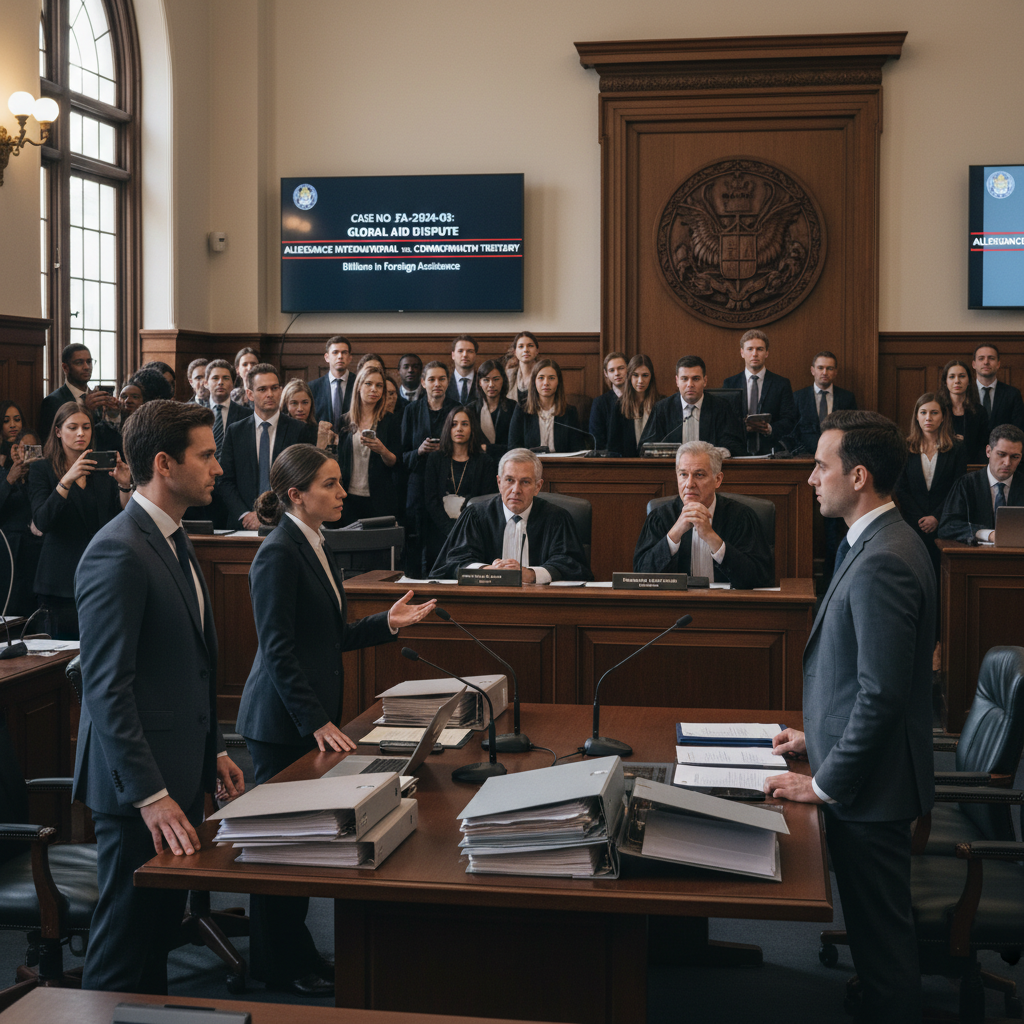
Attorneys for the Trump administration submitted an emergency appeal to the Supreme Court late Tuesday to allow it to withhold billions in foreign aid dollars that Congress had already authorized and appropriated.
The move escalates a legal battle over foreign aid dollars by returning the issue of payments for the U.S. Agency for International Development (USAID) to the nation’s highest court for the second time in six months.
At stake is nearly $12 billion in foreign aid dollars set aside for USAID that the federal government is required to spend before the fiscal year expires on September 30. Trump acted quickly upon his return to office in January. The president signed an executive order on his first day back in office, instructing the federal government to immediately freeze almost all foreign aid payments.
The order was quickly challenged in court. In February, U.S. District Judge Amir Ali in Washington, D.C., ruled in favor of blocking the administration’s plan. Ali found that the White House was required to continue distributing money Congress had already set aside for approved projects and reinstated payments of billions of dollars of USAID grants.
The Trump administration appealed. Earlier this month, the U.S. Court of Appeals for the D.C. Circuit heard the case again and ruled 2-1 to vacate the ruling by Judge Ali. Judge Karen L. Henderson, a George H.W. Bush appointee, writing for the majority, ruled that the plaintiffs — groups that provide foreign aid and had their grant payments restored — did not have a legitimate claim to sue the administration.
Henderson, ruling for the appeals court, wrote that they lacked an appropriate “cause of action” under what is known as the doctrine of impoundment. While the appeals court’s ruling was a win for Trump, that court has not yet issued a formal mandate of that ruling. That has left Judge Ali’s earlier order, and the payment schedule laid out, technically still in effect.
As a result, the Trump administration is on a legal clock, looking to avoid being forced to pay out all $12 billion before the fiscal year expires at the end of September. Legal filings this week by the Trump administration show they are worried about the payment schedule. U.S. Solicitor General D. John Sauer, who filed the emergency appeal with the Supreme Court Tuesday, wrote that if the high court does not act, the federal government will be forced to “rapidly obligate some $12 billion in foreign-aid funds” by the September 30 fiscal deadline.
“The balance of hardships tips heavily in the Government’s favor,” Sauer wrote in the filing. “Congress did not upset the delicate interbranch balance by allowing for unlimited, unconstrained private suits.”
He went on, “The Constitution entrusts certain decisions about the timing and amount of foreign aid to the President, not the courts. Any lingering dispute about the proper disposition of funds that the President seeks to rescind shortly before they expire should be left to the political branches, not effectively prejudged by the district court.”
The plaintiffs in the case, a group of foreign aid organizations that have projects around the world funded by USAID dollars, have argued the exact opposite. The president should not be able to arbitrarily hold money that Congress has already appropriated for spending, they say.
The groups point to two specific laws to support their case: the Impoundment Control Act (ICA), passed in the 1970s to reduce executive overreach of federal spending, and the Administrative Procedure Act.
The legal fight has pitted aid groups that could see their foreign projects delayed and disbanded if the funds are not provided by September 30 against the Trump administration and its effort to seize greater control over federal spending.
The Supreme Court already weighed in on a similar dispute, though, in a narrow 5-4 ruling earlier this year. With the high-stakes fiscal deadline fast approaching and billions in foreign aid funds on the line, the high court now is being asked to again enter the fray.
For Trump and the administration, the battle is a continuation of efforts to reshape U.S. spending and to seize control of the process over foreign assistance programs. For aid groups, it is a fight over the lifeblood of their projects around the world, and if they lose, there will be funding cutbacks, and some projects may have to be shut down.