- calendar_today August 24, 2025
In 2025, Oklahoma cotton farmers are having a rough year, as declining cotton yields and international trade unpredictability hammer one of the state’s most important agricultural industries. What was once a reliable crop in southwestern Oklahoma is fast becoming more unpredictable — and farmers are ringing alarm bells.
In addition to weather issues and increasing expenses, controversy surrounding the Generalized System of Preferences Plus (GSP+) trade program has contributed to the mounting number of issues farmers face.
Cotton Yields Decline Statewide
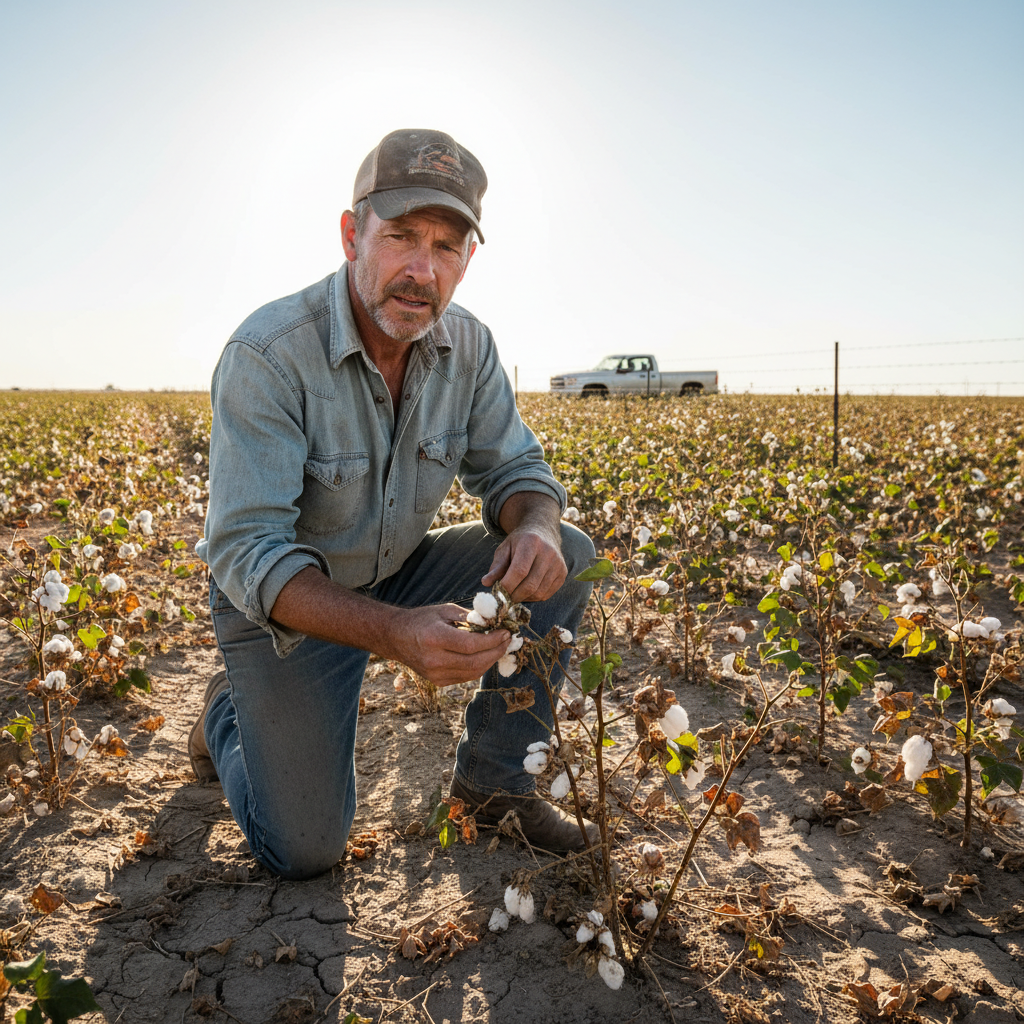
Previous years have seen Oklahoma’s cotton producers thrive on bountiful harvests and favorable market prices. However, with drought conditions and changing weather patterns this year, production has suffered.
“Some crops just didn’t quite make it this year,” explains cotton producer Kevin Marks, near Altus. “We were optimistic after planting, but it did not rain when we needed it to, and the heat got to us.”
According to early estimates, Oklahoma’s cotton output could fall by as much as 20% compared to 2023. While some farmers have irrigation systems, many still rely on rainfall, which has become more unpredictable due to ongoing climate shifts.
Rising Costs Make Things Worse
Meanwhile, costs of inputs have increased. Fuel, fertilizer, and labor are all higher in 2025. These increases make it more difficult for farmers to break even, particularly when yields are low and cotton prices are variable.
“We’re paying more to produce cotton than ever before,” according to Marks. “And with less product to sell, the math just doesn’t work.”
GSP+ Trade Tensions Create More Uncertainty
The Generalized System of Preferences Plus (GSP+) program assists U.S. cotton in competing by reducing trade barriers for exports to some markets. But recent ambiguity regarding the program’s renewal has farmers on edge.
If GSP+ advantages are diminished or eliminated, Oklahoma cotton might be deprived of price benefits abroad — particularly in major markets such as Pakistan, Bangladesh, and the Philippines. That would make it even more difficult for American cotton to compete with lower-cost nations such as India or Brazil.
“Trade agreements are not political sound bites,” adds Oklahoma State University agricultural economist Amanda Collins. “They have a direct impact on how much producers can be paid for their product.”
The Rural Community Impact
Cotton growing provides more than just livelihoods for the farmers. It spurs ginning plants, transportation companies, farm supply outlets, and equipment retailers. As output declines, the domino effect travels quickly through rural communities.
In counties such as Harmon, Jackson, and Tillman, where cotton has been the foundation of local economies for decades, families are already beginning to feel the sting.
“We’ve had to put off equipment upgrades and reduce seasonal hires,” says Jerry Wilson, who operates a cotton gin close to Frederick. “It’s just not the year we expected.”
Calls for Support and Stability
Most of these farmers are now urging the state and federal legislatures to intervene. They are demanding the following:
- Clarity and reauthorization of the GSP+ program
- Emergency relief funding for regions most affected by drought
- Beekeeping and environmentally friendly agriculture support and improved crop insurance
Others are also demanding funding for research to make cotton more resistant to drought and heat — issues that will likely become even more prevalent in the years to come.
Holding Onto Hope
Despite the struggles, numerous Oklahoma cotton farmers are remaining optimistic. They’ve endured lean years in the past and learned to make adjustments, diversify, and persevere.
“We’re not giving up on cotton,” says Marks. “But we do need the right tools and support to stay in the game.”
For the meantime, everyone is focusing on fall harvest, world market conditions, and whether or not trade deals like GSP+ will provide farmers a stable foundation to make plans for next year.
Bottom Line:
Oklahoma cotton farmers stand at a turning point in 2025. With declining production and increasing trade uncertainty, they’re hoping to ride out the storm — but they’ll not be able to do so on their own.