- calendar_today August 10, 2025
OpenAI introduced “Images in ChatGPT,” a revolutionary capability that incorporates direct image creation into ChatGPT’s platform. The introduction of the GPT-4o model enables users to produce images through their conversation exchanges, which represents a major advancement in AI-based content generation.
ChatGPT now features image generation capabilities across all available subscription levels, including Plus, Pro, Team, and free access to expand reach to advanced image creation tools. According to OpenAI representative Taya Christianson, free tier users face similar usage restrictions to DALL-E 3 but generate approximately three images daily, with potential adjustments to these limits based on demand. DALL-E fans will maintain access via a specialized custom GPT.
OpenAI research leader Gabriel Goh explained that GPT-4o represents a major advancement due to its “omnimodal” capabilities to handle text, images, audio, and video data types. The model now features advanced “binding” features, which solve a longstanding obstacle in AI-generated image production. GPT-4o surpasses earlier models that frequently misjudged object relationships by accurately processing 15 to 20 objects without confusing their color or shape.
The system demonstrates significant advancement through its enhanced text rendering capabilities. AI-generated images traditionally display distorted or nonsensical text output. Goh explained that the production process was an extensive iterative effort spanning several months until it reached perfection. Despite the ongoing difficulties in achieving flawless text rendering for small text, the team successfully established consistent text quality in images that remains usable.
The design of the system utilizes an autoregressive method instead of the diffusion models typically found in image-generating tools. The image generation method that moves from left to right and top to bottom, like text generation, has been speculated to enhance text rendering and binding functionality.
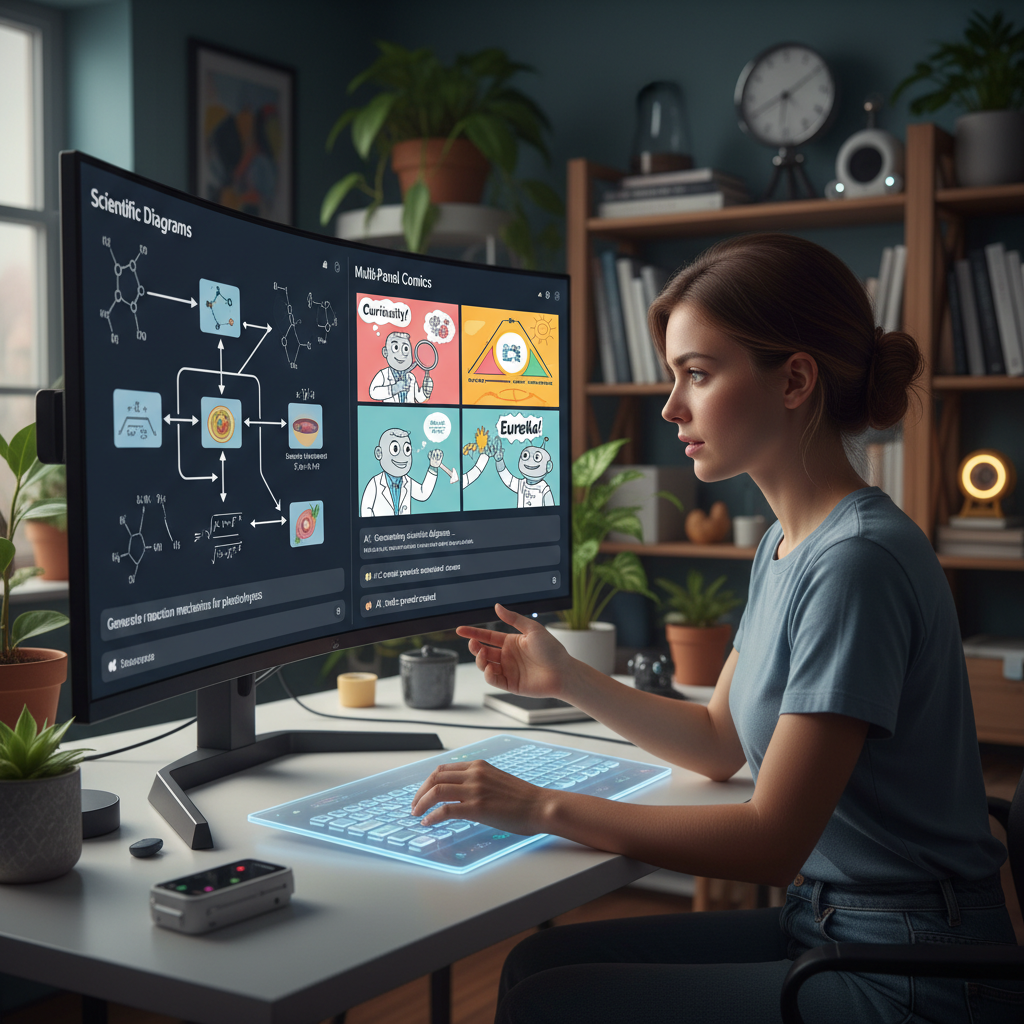
OpenAI demonstrated diverse applications of their system during a briefing, which included creating scientific diagrams like Newton’s prism experiment with precise labels, as well as generating multi-panel comics with consistent characters and dialogue, and designing informational posters with correct text. The demonstration included practical examples like creating transparent background images suitable for stickers, menus in restaurants, and company logos.
Jackie Shannon, who leads multimodal products at ChatGPT, highlighted how the system utilizes world knowledge to function effectively. When she creates an image, she does so within her own skill boundaries but includes everything she knows from the world around her. By integrating world knowledge into its design, the model understands Newton’s prism experiment without needing extra explanation to return the correct image.
OpenAI contends the improvements in quality and capabilities make the extended image generation time worthwhile. Shannon remarked that even though latency improvements are possible, the high quality and world knowledge embedded in these images compensate for the extra seconds users wait.
Key Insights: Safeguards, User Ownership, and Technological Advancements
OpenAI addressed potential misuse concerns by implementing strong protective measures. The system protects against watermark removal while blocking sexual deepfakes production and CSAM requests. OpenAI creations will contain standard C2PA metadata within all generated images while lacking visual watermarks. OpenAI operates internal image verification tools as part of its infrastructure.
Shannon declared that while no system achieves perfection in this area, we are advancing our protective measures, which we consider the initial step. Users fully own every image produced through ChatGPT while retaining the ability to use these images for any purpose permitted by our usage policies.
The inclusion of image generation within ChatGPT marks a major breakthrough in AI-generated creative outputs. OpenAI shows dedication to creating a strong yet responsible application through improved binding features, better text rendering quality, and comprehensive protection mechanisms. The company’s innovative image generation strategy becomes evident through its transition to autoregressive methods away from traditional diffusion models. OpenAI stresses transparency and ethical use through user ownership and metadata integration in AI-generated content development. OpenAI’s implementation of “Images in ChatGPT” enhances its main product while establishing new benchmarks for user-friendly yet powerful AI image generation.