- calendar_today August 21, 2025
Mobile technology is transitioning through a fundamental transformation thanks to swift progress in generative artificial intelligence technology. Remote servers currently provide the computational power for sophisticated AI features, but Google is mapping out a path to embed advanced AI capabilities directly into personal smartphones. The tech community is eagerly awaiting the Google I/O event because strong evidence points to the imminent launch of new developer APIs that utilize the Gemini Nano model to enable powerful on-device AI processing. This tactic demonstrates Google’s dedication to advancing AI technology to end-users while boosting data security and application efficiency through reduced dependence on cloud systems.
The Dawn of Localized Intelligence
Developer documentation released by Google has provided an early glimpse into upcoming AI improvements planned for the Android ecosystem. According to investigative reports by Android Authority, an upcoming update to the ML Kit SDK will deliver full API support for on-device generative AI capabilities through the Gemini Nano model. Built upon Google’s AI Core foundation, this framework exhibits a design that merges the essential elements of the Edge AI SDK with a more integrated approach, which prioritizes user experience. The framework’s close integration with an existing model, combined with its provision of explicit functionalities to developers, intends to simplify the implementation process, which enables mobile app developers to access advanced AI features to enhance their applications.
Core AI Functions On Your Device
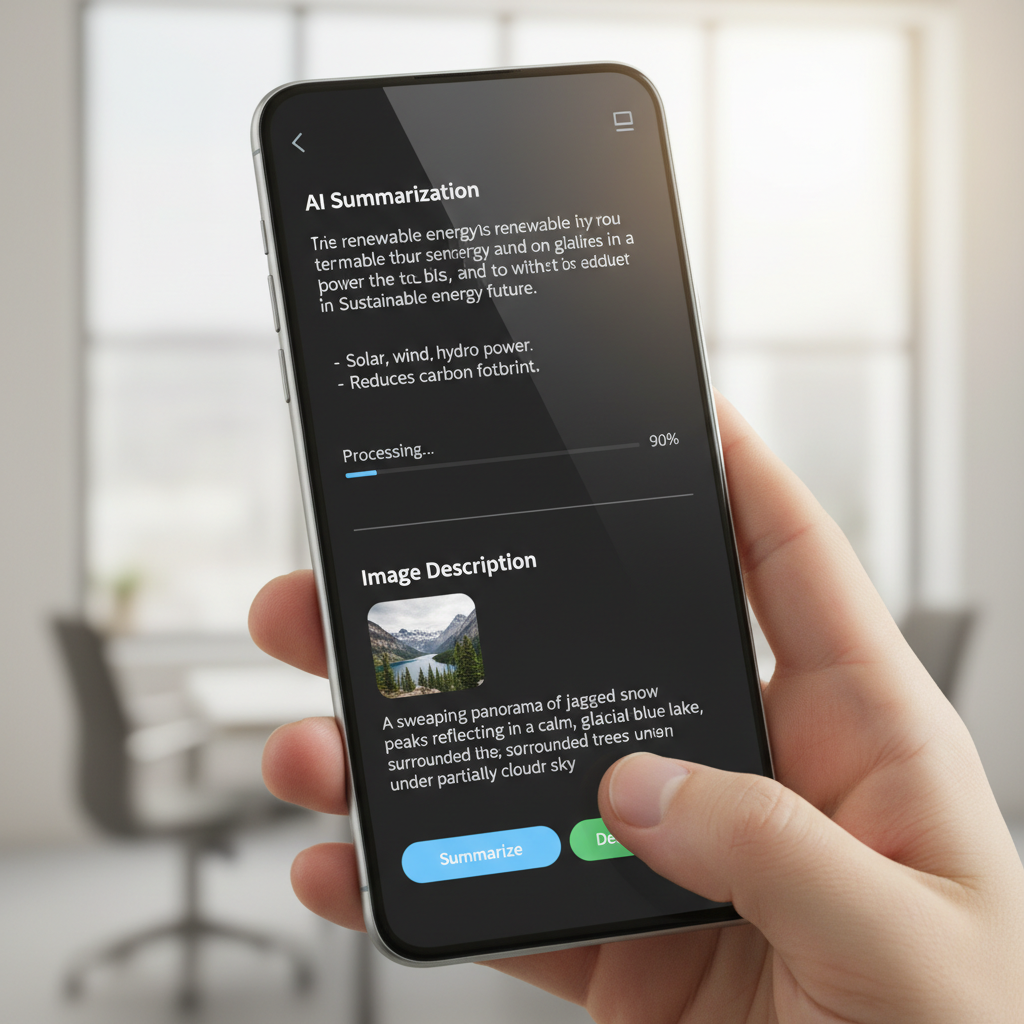
The new ML Kit GenAI APIs enable applications to perform essential functions on-device, as described in Google’s detailed documentation, which changes the requirement for continuous cloud-based processing of sensitive data. The primary functionalities include the transformation of long text into brief summaries that are easy to absorb, along with an automated system for detecting and proposing fixes for grammar issues and typos that also suggests alternative sentence constructions and style improvements to enhance written communication, together with the ability to create detailed text descriptions from images.
Mobile devices inherently possess physical and processing restrictions that require specific limitations to be applied to the operational parameters of the Gemini Nano model that runs on these devices. The algorithm limits text summary generation to three bullet points, and English-only language capabilities will define the initial deployment of image description functions. The specific version of the Gemini Nano model included in a smartphone hardware configuration leads to subtle variations in the quality and nuance of AI-generated outputs. The size of the standard Gemini Nano XS remains below 100MB, but the more compact Gemini Nano XXS used in devices like the Pixel 9a has a file size that is only one-fourth as large, while it functions exclusively with text processing tasks and has reduced contextual awareness capabilities.
Wider Android Integration
Google’s strategic move has profound effects across the entire Android ecosystem because the ML Kit SDK works with more than just Pixel devices. The Gemini Nano model powers Pixel smartphones today, but now major Android manufacturers like OnePlus (13 series), Samsung (Galaxy S25 lineup), and Xiaomi (15 series smartphones) are reportedly building their next-gen devices with built-in support for this advanced on-device AI model. Developers will access a broader and more varied audience of smartphone users as more Android devices start supporting Google’s local AI model, because they can create more sophisticated AI-powered applications, which will lead to richer user experiences across numerous brands and device categories.
Empowering Mobile Developers
Android app developers who aim to integrate on-device generative AI functionality into their applications face multiple significant challenges within the current technological environment. The AI Edge SDK developed by Google provides access to the dedicated Neural Processing Unit (NPU) for running AI models, yet remains limited because it supports only Pixel 9 devices and focuses mainly on text processing tasks, which restricts its broad applicability to developers. Prominent technology companies like Qualcomm and MediaTek deliver proprietary API suites for AI workload management on their chipsets, yet their feature inconsistency across various architectures makes these solutions complex and suboptimal for sustained development. The development and integration of custom AI models require a prohibitive amount of specialized knowledge in the complex details of generative AI systems due to their intricate and demanding nature. These new Gemini Nano model-based APIs will allow more developers to easily access local AI functions and simplify implementation, which will foster innovation across mobile application development.