
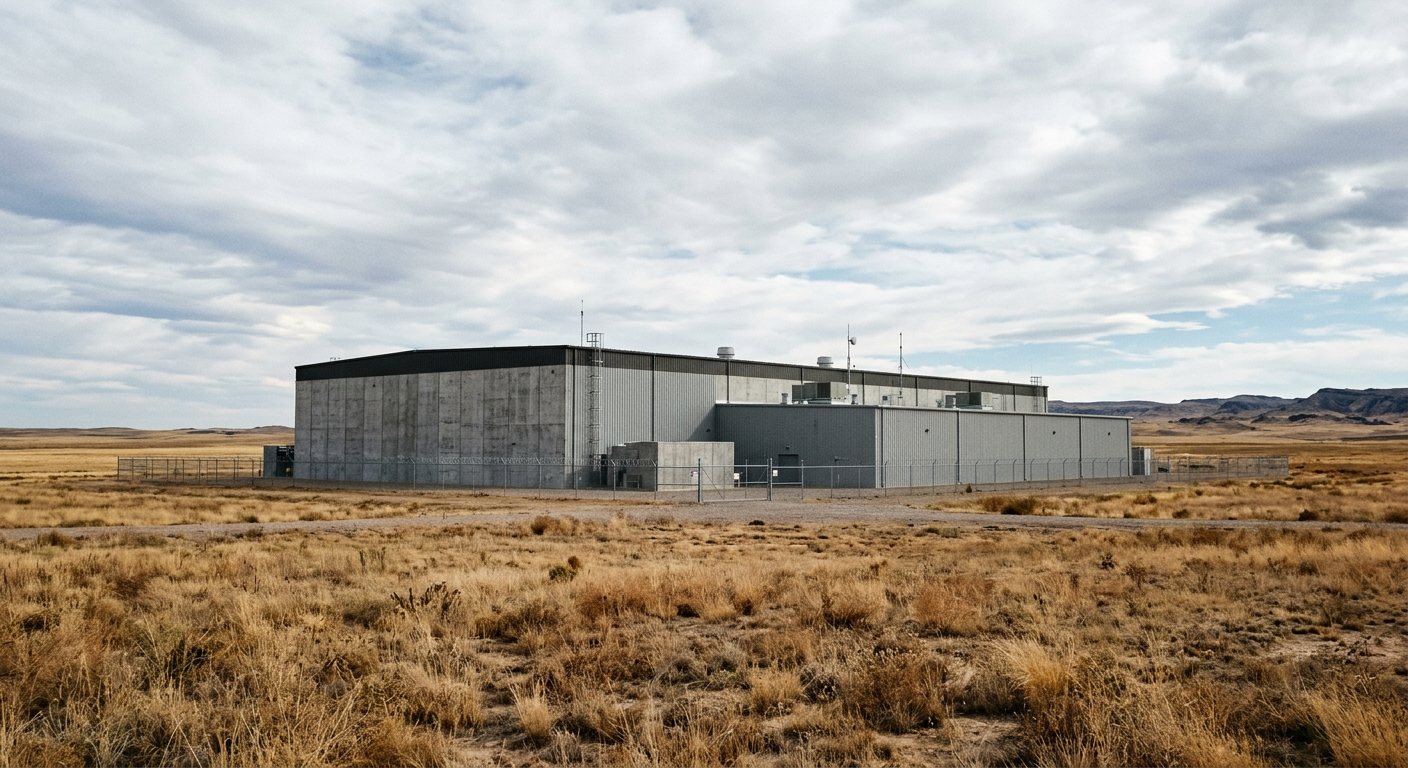
AI-generated illustration; not a photograph of the reported event.
- calendar_today October 29, 2026
Oklahoma's Data Center Boom Sparks Legislative Debate
Data centers have become a central topic of discussion in Oklahoma as the state sees increasing interest from companies looking to establish these facilities. The conversation is particularly focused on the economic impact, job creation potential, and community concerns that accompany the rise of data centers across the state.
Legislative Discussion Draws Diverse Viewpoints
This week, Oklahoma legislators joined with academic and industry experts to examine the pros and cons of data centers. The discussion, led by Senator Casey Murdock (R-Felt), aimed to bring clarity to both the economic benefits and the possible challenges associated with the data center boom.
Senator Murdock emphasized the need for a balanced conversation: "If we are going to get this right for Oklahoma, we are going to need to ask difficult questions, hear opposing viewpoints and let the facts speak for themselves." He encouraged the airing of concerns as well as support for data center development, noting that every Oklahoman could be affected by these decisions.
Economic Impact and Revenue Potential Analyzed
McKenzie Boyce, Assistant Professor in the Department of Agricultural Economics at Oklahoma State University (OSU), provided insight into the potential economic impact and revenue data centers might offer. "One of the reasons any community is probably going to consider a data center is the potential economic benefit that it might bring to that host community, and a lot of that benefit is going to occur through revenue streams," Boyce explained.
However, she cautioned that the actual amount of tax revenue generated from data centers depends greatly on the location, size, and scope of each facility. "While sales tax revenue can be one potential revenue source for communities that are hosting different types of data centers, the size and scope of that data center is probably going to determine how much sales tax revenue might actually accrue within that community," Boyce noted.
Job Creation: Temporary Boost, Limited Long-Term Opportunities
The question of job creation was also discussed, with Brian Whitacre, Professor and Jean & Patsy Neustadt Chair in Agricultural Economics at OSU, highlighting that most employment benefits occur during the construction phase. "Those construction jobs are roughly 10 times the number of operational jobs," Whitacre said, indicating that while there is considerable short-term employment, operational jobs tend to be far fewer.
Both experts agreed that since data centers are relatively new in the region, there are limited real-world examples to study, making it important for communities to weigh both short-term and long-term impacts before moving forward with developers.
Utility Prices and Housing Effects
The effect of data centers on local utility prices and housing markets was another area of focus. Whitacre presented findings indicating fluctuating utility prices: "The first study here shows that yes, prices do rise in locations where the utility is relatively small. The middle chart actually shows that in some cases it might be feasible that the price of electricity actually drops."
Beyond utilities, Boyce pointed out that data centers can also influence housing prices. "If data centers generate local benefits, housing prices could rise as households demand access to the improved opportunities and amenities that accrue within that community," she said. Conversely, if data centers pose significant burdens, housing prices could potentially decline.
Conclusion: Community Considerations and Decision Making
Boyce concluded by emphasizing that while data centers can bring economic benefits to a community, the scale of those benefits depends on factors such as the specific project, the local community, and the terms negotiated between developers and municipalities. The panel aimed to provide lawmakers and residents with an objective view to help Oklahoma communities make informed decisions about the growth of data centers in the state.
Source: kfor.com.


