
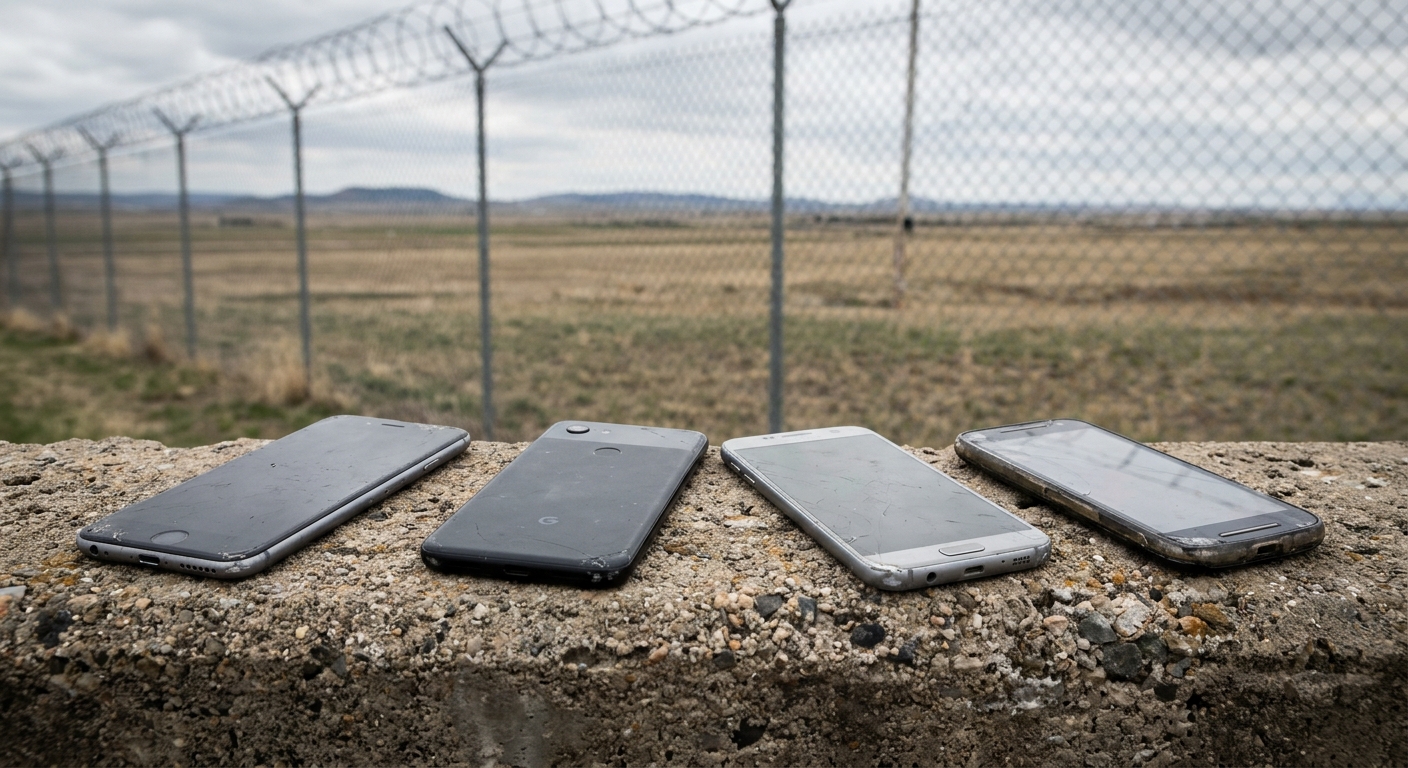
AI-generated illustration; not a photograph of the reported event.
- calendar_today November 20, 2026
FCC Approves Cellphone Jammers in Prisons
The Federal Communications Commission (FCC) voted Thursday to allow state prisons, including those in Oklahoma, to use cellphone signal jammers. This decision marks a significant shift in policy and provides Oklahoma corrections officials with a tool they have sought for years to combat the growing problem of contraband cellphones within their facilities.
Contraband Cellphones: A Persistent Issue
Contraband cellphones have been repeatedly smuggled into prisons by visitors, corrupt staff, and even drones. From January through September, Oklahoma Department of Corrections staff seized 5,758 contraband cellphones—approximately one for every four people in custody, according to Chief of Public Relations Kay Gallamore. While some inmates use these phones to maintain contact with family outside, many are used for criminal activity.
A 2024 Oklahoma Watch investigation found that such phones are often used to extort prisoners' families, threatening violence if ransom demands are not met. Many of these cases reportedly go unreported due to fear of gang retaliation.
Signal Jamming Technology and Past Challenges
Signal jamming technology disrupts communication between mobile devices and cellphone towers by transmitting a radio-frequency signal. Despite its existence for decades, federal regulators have previously hesitated to approve its use in prisons due to concerns about interference with legitimate communications in neighboring areas.
Previous alternatives, such as a 2020 plan to require inmates to wear wristbands capable of detecting cellphone signals, were abandoned following gang threats of violence against participants.
Implementation Plans and Safeguards
In 2021, Oklahoma received federal approval to install contraband interdiction systems at select facilities, including the Oklahoma State Penitentiary and Dick Conner Correctional Center. These systems can identify and disable illegal phones but are costly to implement.
The new FCC rule requires that prisons conduct multiple rounds of testing before jammers can be approved, ensuring that signals outside prison walls are not affected. Wireless carriers, emergency responders, and neighboring communities must be notified in advance of any testing. States will also require approval to modify jammer locations or frequencies.
Department of Corrections Director Justin Farris praised the FCC’s action, calling it a "historic and necessary step" to enhance security. FCC Chairman Brendan Carr acknowledged the potential limitations of the technology but described the approval as overdue, stating, “This itself is not going to be a silver bullet… But I think it’s time we stop denying this technology to state and local officials.”
Balancing Security and Communication Needs
Emily Barnes, founder of the prisoner advocacy group Hooked on Justice, expressed mixed feelings about the decision. She highlighted that many prisoners use contraband phones to remain in contact with family, often to avoid high official prison phone fees, which recently more than doubled to $2.10 for a 15-minute call. However, Barnes agrees that the dangers associated with contraband phones—including coordination of violence and drug trafficking—often outweigh the benefits of easier communication.
Barnes suggested that reducing the cost of prison phone calls could lessen the demand for contraband phones, sharing that some inmates would not need illicit devices if calls were free or more affordable.
Legislative and Regulatory Next Steps
Oklahoma prison officials are also seeking stricter criminal penalties for contraband cellphone use. On November 18, the Board of Corrections approved a request to propose legislation making unauthorized communication with inmates a felony. A legislator must sponsor the bill for consideration before the January 14 filing deadline, with the next regular legislative session beginning February 1.
As Oklahoma officials review the FCC’s final rule and available technology, the Department of Corrections has indicated it will prioritize the implementation of cellphone jamming at higher security facilities, such as the Oklahoma State Penitentiary.
Related coverage
Source: oklahomawatch.org.


