
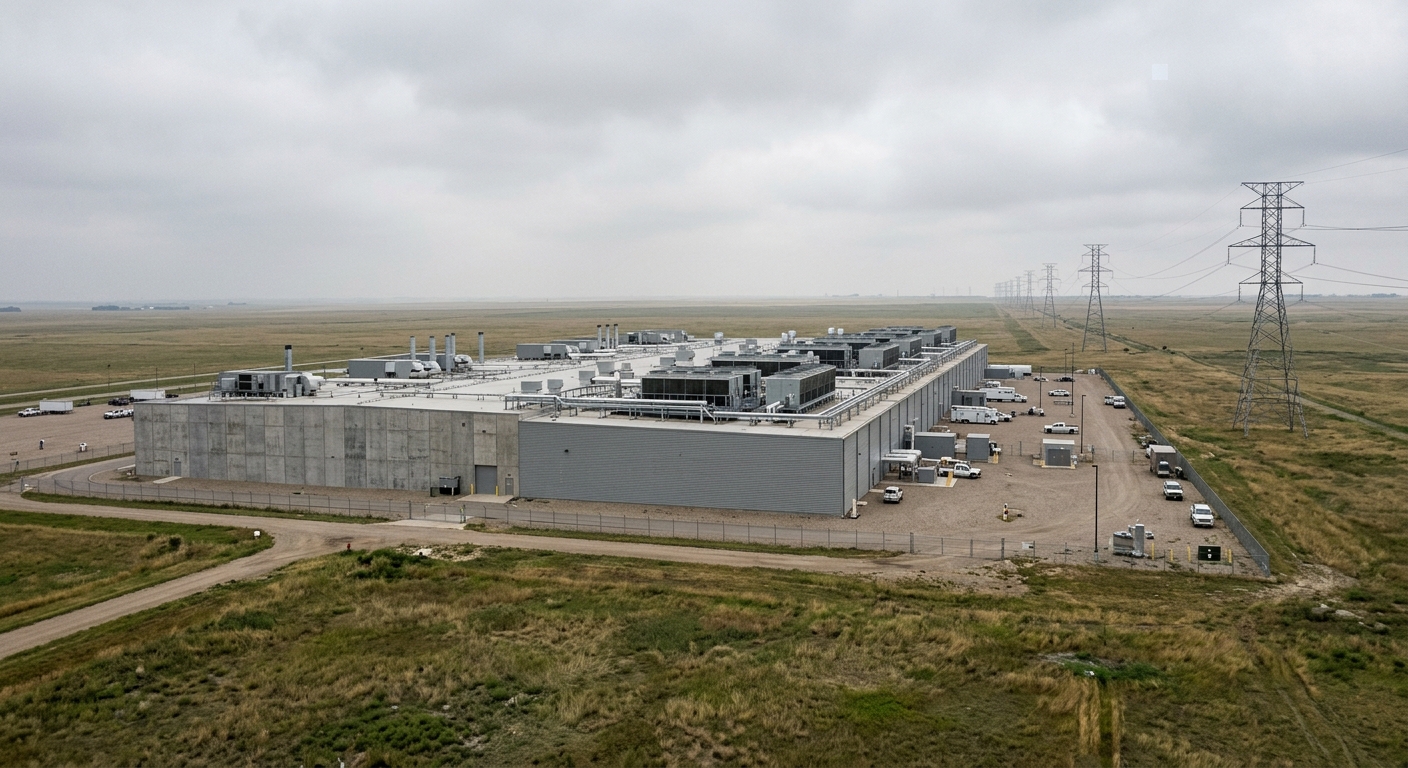
AI-generated illustration; not a photograph of the reported event.
- calendar_today October 20, 2026
Rising Data Center Expansion Fuels Coal Emissions in Oklahoma
The recent spate of air quality alerts in Oklahoma has brought renewed attention to the state’s growing number of data centers and their environmental impact. Professor Xiao-Ming Hu, an air quality researcher at the National Weather Center at the University of Oklahoma, is at the forefront of studying how emissions from fossil fuel-burning power plants—especially those burning coal—are exacerbated by data center expansion and how these pollutants can be carried into Oklahoma by Atlantic tropical storms.
Storms Push Pollutants Inland
On October 9, as tropical cyclone Isaias struck the East Coast, Oklahomans avoided the storm’s heavy rainfall but faced a different threat: a surge of invisible pollutants. According to Hu, strong inland winds transported coal emissions from Northeast power plants, worsening air quality in Oklahoma City. His research shows a direct link between coal-burning facilities, ozone pollution, and atmospheric conditions that allow pollutants to travel far from their source, posing health and environmental risks.
Data Centers and Resource Demands
The proliferation of data centers across Oklahoma is intensifying pressure on power grids and water supplies. Data centers run continuously, demanding large amounts of electricity—often generated by coal-fired plants—and water for cooling. The Pryor Creek Google data center, for example, withdrew 1,397 million gallons of water in 2025, consuming (evaporating) about 1,081 million gallons, or roughly 3 million gallons each day, with the remainder filtered and returned to the Neosho River. Only a fraction of centers have adopted refrigerant-based cooling, which could help reduce their physical footprint and environmental impact.
Cooling Systems and Water Use
Assistant Professor Ardeshir Moftakhari of Oklahoma State University notes that modern data centers have evolved from air cooling to liquid and now, potentially, refrigerant-based systems. Air and liquid cooling methods consume significant quantities of water, posing challenges during droughts and requiring strict monitoring to avoid contamination. The Pryor center is monitored by the Department of Environmental Quality, performing regular tests on water quality and chemical levels. The center almost entirely avoided chlorine discharge over a recent one-year period, and pH levels remained safe for drinking, but water lost to evaporation represents an ongoing resource concern.
Hazards and Contingencies
The rise of advanced refrigerant cooling brings new safety challenges. In the summer, an accidental HVAC leak at the Pryor facility exposed fourteen people to R-410A refrigerant, resulting in health symptoms ranging from dizziness to numbness. Local emergency services responded, and afterwards, a review was conducted to address response procedures. Google declined to comment, citing ongoing litigation. When cooling systems fail, backup diesel generators are sometimes deployed, presenting additional air quality risks. A Harvard study has linked emissions from generators to increased rates of heart and respiratory illnesses.
Economic and Community Impacts
Local officials have mixed views on the data center boom. Mayes County Commissioner Steve Grossman welcomes more centers for their economic benefits, including job creation and business for local establishments. Google recently invested $500,000 in local schools and nonprofits. Data centers in the MidAmerica Industrial Park, where another facility is planned, rely on electricity from the Grand River Dam Authority’s coal- and gas-fired energy center. According to park officials, existing water filtration systems are adequate for further growth.
Policy, Monitoring, and the Path Forward
With energy demands from data centers increasing, some are considering on-site power generation, which complicates pollution monitoring. Professor Hu emphasizes the need for more data to track and quantify health impacts linked to pollution. State Representative Mark Chapman advises caution before enacting statewide legislation, noting that localities should weigh the benefits and risks according to their own circumstances. Researchers at Oklahoma State University are working to provide information to guide such decisions. As the dialogue continues, experts and local leaders stress that development must be balanced with careful planning and robust environmental safeguards.
Source: oklahomawatch.org.


