
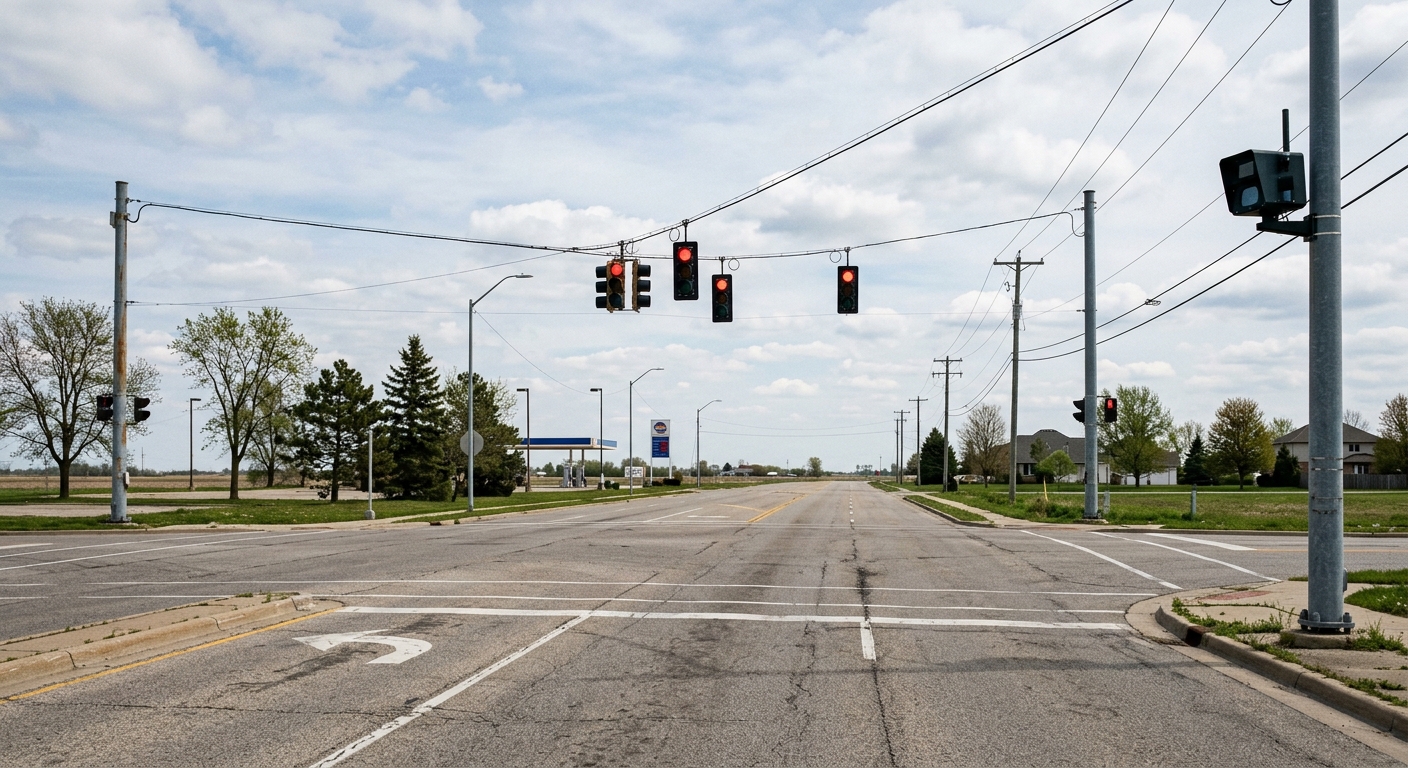
AI-generated illustration; not a photograph of the reported event.
- calendar_today August 29, 2026
Oklahoma is exploring the potential of the ‘rest in red’ traffic safety system, which has gained national attention for its innovative approach to speed control and accident prevention on urban roads.
How ‘Rest in Red’ Works: Speed Sensors and Green Timing
First developed and piloted in cities like Albuquerque and Portland, the ‘rest in red’ system utilizes speed sensors to detect approaching vehicles. The technology only triggers green light timing for drivers who adhere to posted speed limits. Vehicles exceeding the limit encounter longer red cycles, discouraging speeding and rewarding speed compliance among motorists. By reinforcing legal speed limits, this approach supports smoother commutes and reduces potential traffic crashes on busy corridors.
Notable Reductions in Speeding and Accidents
Albuquerque installed ‘rest in red’ along a significant residential thoroughfare and subsequently reported a sizable drop in instances of traffic crashes and related injuries. In Portland, an intersection equipped with the system saw average speeds decrease from 39 mph to the posted 30 mph limit. These data points highlight the system’s capacity for promoting speeding reduction and better driver behavior, outcomes that resonate strongly with Oklahoma’s efforts to enhance traffic safety across its metropolitan and suburban areas.
Expert Analysis and Community Feedback
Researchers at Oregon State University are currently assessing the long-term outcomes and broader community impacts of ‘rest in red’ schemes. Early results are promising, but experts caution that further study is needed to measure potential side effects, such as increased risks of red-light running. Community response has been balanced, with traffic safety advocates highlighting the strategy’s strengths, while some professionals emphasize the importance of comprehensive driver education and consider whether less complex measures could also be effective.
Oklahoma’s Interest in Urban Speed Control
Traffic engineering agencies in Oklahoma are monitoring the system’s progress closely, recognizing its suitability for urban roads with fluctuating traffic volumes. The approach requires substantial driver compliance—if even one vehicle exceeds the speed limit, it may hold a red light for the whole queue, underlining the need for community-wide commitment to speed control initiatives. Local officials remain optimistic that adapting such advanced traffic signals could complement statewide goals of reducing collisions and fostering safer thoroughfares.
Balancing Innovation with Practicality
Although adoption in other U.S. cities has been varied, studies consistently indicate that ‘rest in red’ can yield substantial safety benefits where implemented diligently. Oklahoma’s urban planners are weighing the potential of introducing these intelligent traffic signals, noting that effectiveness hinges on sustained speed compliance. Discussions continue about combining advanced sensor-based systems with public awareness campaigns to maximize positive outcomes on the region’s busiest intersections.
Potential for Broader Regional Impact
With Oklahoma’s ongoing commitment to modernizing its roadways, the rest in red concept is being positioned as a promising tool in the battle against preventable accidents. As regional transportation departments evaluate the successes and lessons from Albuquerque, Portland, and other municipalities, the integration of advanced speed sensors and responsive green light timing offers hope for lasting reductions in both speeding and urban road injuries. Whether widespread adoption follows, the experience of these cities demonstrates a proactive, data-driven approach to protecting Oklahoma drivers and communities.


